
Suzanne Callander reports on the hugely important role that colour has to play in confectionery. It sends out an important, albeit often subliminal, message to consumers about the product.
There can be no denying the continuing shift toward healthier and more natural confectionery in recent years. Brands have been hard at work cleaning up their ingredient lists in line with consumer demands to ensure they are able to maximise product acceptance.
The growing shift toward more natural ingredient lists has also had a clear impact on the use of colour in the confectionery industry. Colour is often the first thing people notice about a product and it can send out a powerful signal about product identity, flavour, and quality. Red hues, for example, are often associated with sweetness, while green can suggest sourness or bitterness. This association has evolutionary roots – our ancestors relied on colour to discern ripe, sweet fruits from their bitter, unripe counterparts.
Colour intensity can also affect perceived sweetness. A study published in the ‘Journal of Food Science’ found that drinks with more saturated colours were perceived as sweeter, regardless of the actual sugar content. This phenomenon underscores the importance of colour in creating a product that meets consumer expectations.
For confectionery manufacturers, understanding the link between colour and taste perception is crucial. It can inform product development and marketing strategies, ensuring that the visual presentation aligns with the intended flavour profile.
“Traditionally, confectionery have used really vibrant colours, which suggested products have intense flavours. Today, however, many European brands have started to move away from the most vibrant shades because of their growing association with increased sugar content and they are also seen as being less natural,” says Maartje Hendrickx, Market Development Manager at GNT Group.
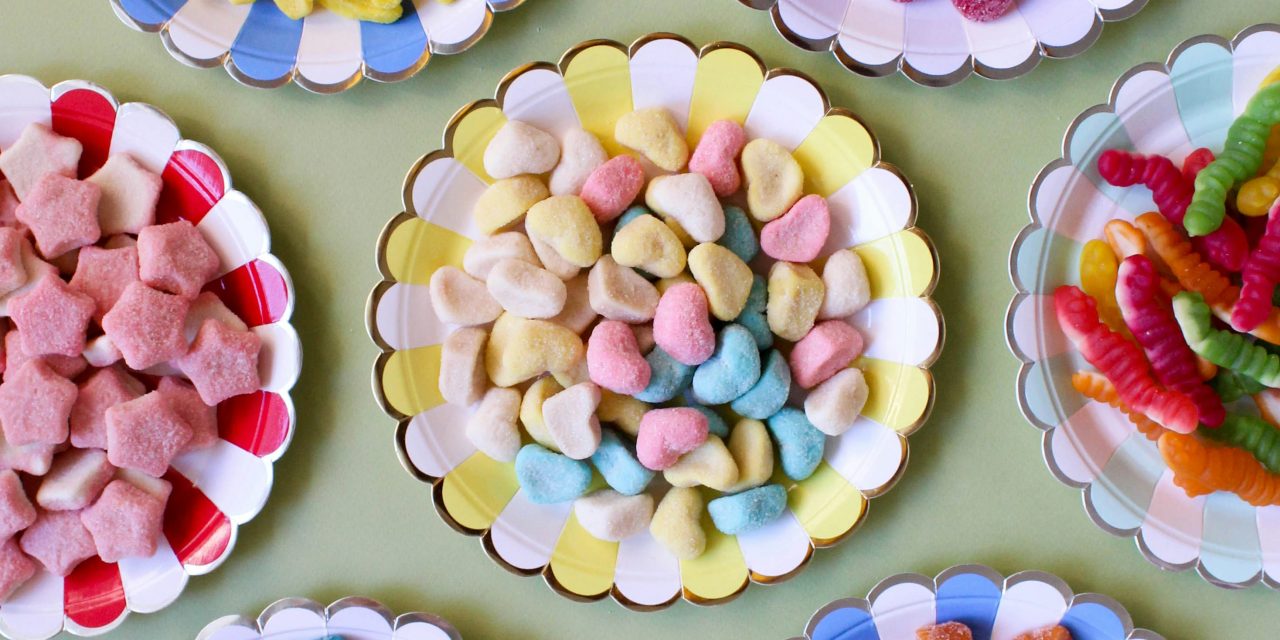
While bright shades are still being widely used – and they can be effective – pastel shades are also becoming increasingly prevalent in Europe. “Soft, simple pastel hues, such as pinks, purples, and reds are being used in products such as gummies, foamies, and pressed tablets and are very popular in vegan confectionery,” continues Maartje. “There are also a lot of colours that are naturally derived directly from fruits, such as lightly coloured jellies with real encapsulated fruit for a stained-glass effect. The appearance of these products is used to enhance the ‘clean treat’ experience, helping to signal self-care and conscious indulgence.”
Products are not only becoming more natural and healthy but are also becoming more sustainable too. More and more brands are moving to the use of biodegradable or recycled packaging materials and are using these to showcase their environmental credentials with claims such as ‘vegan-friendly’ and ‘Rainforest Alliance-certified’. “It’s clear that sustainability is becoming increasingly important to consumers of all ages,” confirms Maartje. “They are thinking more about how food and drink is produced. We are due to publish our analysis on this ‘Regeneration Rising’ trend very soon, which explores the growing desire to protect and restore the planet and reconnect with nature.
“Our EXBERRY colours are made from non-GMO fruits, vegetables, and plants and we offer a full spectrum of food colouring to support clean and clear label declarations. As well as helping brands with the technical aspects of switching to plant-based colours, GNT is also help confectionery manufacturers understand key colour trends and identify effective choices,” says Maartje.
According to Maartje, the move towards more sustainable products is having several impacts. “Beyond the importance of sustainable ingredients, we are seeing the emergence of a new palette inspired by the natural world, such as inky teals, rich reds, warm browns, and cloudy yellows. In confectionery, that can mean the treacly browns of sour tamarind, sapote, or carob and tree caramel in old-fashioned boiled sweets and lozenges. Medicinal fruit leathers, gummies, and jellies could feature the flavour and colour of deep-red seasonal fruit alternatives like rowan berries. These products also often feature stories about sustainability, ingredient origins, and authentic processing to help build connections with consumers.”
Shaping perceptions
There has always been an important interplay between colour and confectionery products, exploring how different hues and tones can shape consumer perceptions.
So, colour should never be considered as merely a visual element in confectionery – it’s a powerful tool that influences consumer behaviour and enhances the overall sensory experience,” according to Stella Munhoz, Oterra’s Marketing Manager for Latin America. Oterra recognises the significance of colour in creating captivating products that resonate with consumers on a deeper level. Through research and development, it has created a diverse palette of natural colours to meet consumer demand for clean label products and which are also designed to help elevate the indulgent experience of confectionery treats. Emphasising the emotional connection between colour and consumer perception, Stella says: “Colours have the remarkable ability to evoke positive emotions and enhance sensory experiences, making them a crucial aspect of confectionery product development.”
According to ‘Innova Category Survey 2023 – Decadent Delights: Exploring Global Chocolate Confectionery Trends’ 46% of chocolate consumers agree with the comment “I look for food and beverage that offers healthy indulgent options”. Surveys such as this validate the shift towards healthier indulgence. An adhoc survey undertaken on behalf of Oterra in 2023 seeking confectionery category information spoke to 1,400 people in Latin America backs this up. It showed that 65% of consumers would choose one candy over another because it has natural colours instead of artificial ones, and 73% of people would spend more money on candies made with natural colours.
An international trend
While regional trends may vary, there can be no denying the overarching and global move towards consumers becoming more conscious about what goes into their bodies. Working in the global confectionery marketplace and following the ever-changing series of national, international, and regional health and safety regulations can be quite a challenge.
Just oneexample of changing regulatory status is titanium dioxide. Despite having been used for decades, the European Union banned titanium dioxide as a food additive in 2022. In other regions, such as the United Kingdom and Canada, its status differs and ‘there is no conclusive scientific evidence that the food additive is a concern for human health.’ It remains manufacturers’ choice whether they would like to formulate with or without titanium dioxide.
So, the development of international products or brands does need to consider a variety of different local regulatory requirements across markets. “To help developers focus on the colour shade without having to worry about regional compliance, Sensient has created a selection of colouring extracts and concentrates that meet stringent regulatory requirements in both Europe and the USA,” says Dr Andreas Klingenberg, Technical Director at Sensient Food Colors EMEA. “These solutions can satisfy consumers’ desire for natural ingredients. Sensient’s portfolio originates from traditional foods, such as vegetables and fruits and combines colouring efficiency with stability. Sensient’s formulation know-how and technical expertise can achieve intense and vibrant shades in all the colours of the rainbow.”
Sensient argues that, alongside the trend towards ‘better-for-you’ ingredients, consumers do still love colourful confectionery. “Humans have an inherent preference for brighter colours, and a product’s visual appeal has a significant impact on purchase intent, flavour expectation and overall product quality,” says Andreas. He pointed out that brightly coloured pan-coated sweets are still enjoying higher popularity than their muted counterparts. “ More vibrant colour is perceived to be more appetizing and flavourful and receives a higher quality perception,” he says. “Lastly, sweets with brighter colours can be perceived to be sweeter, giving brands a great opportunity in the context of sugar reduction agendas.”
Today social media platforms are also gaining ground when it comes to influencing consumer interactions and choice, and here colour is key in meeting consumers’ desire for ‘share-worthy’ or ‘Instagrammable’ sweets!
According to Sensient, yellow shades are among the top three colours for confectionery launches today. Traditionally, synthetic colourings, such as Tartrazine, would have been used to achieve those vibrant, intense colour shades, especially in markets like the USA or Middle East and North Africa (MENA). The growing demand for natural ingredients, however, is leading confectionery companies to look for alternatives and Sensient’s recent addition to its Intense Yellow family achieves a colourful, vibrant yellow naturally. To achieve this it has used the vividness and positive perception of curcumin, while minimising the limitation arising from its light stability. It is said to provide good fit for confectionery and sugar decorations and excels in preventing migration and fading.
Unfortunately, there will never be a simple one-size-fits-all approach to colour selection. It’s all about choosing the colours and shades that will meet the legislative requirements of the regions the product is aimed at and will help build a strong narrative around a particular brand or product’s identity and flavour to ensure you are sending out all the right messages to your target consumers.
Editorial contact:
Editor: Kiran Grewal kgrewal@kennedys.co.uk

