Suzanne Callander reports on how a novice confectionery producer has been able to bring a well-loved complex moulded chocolate bar, the Sky Bar, back to life with a compact, automated moulding solution.
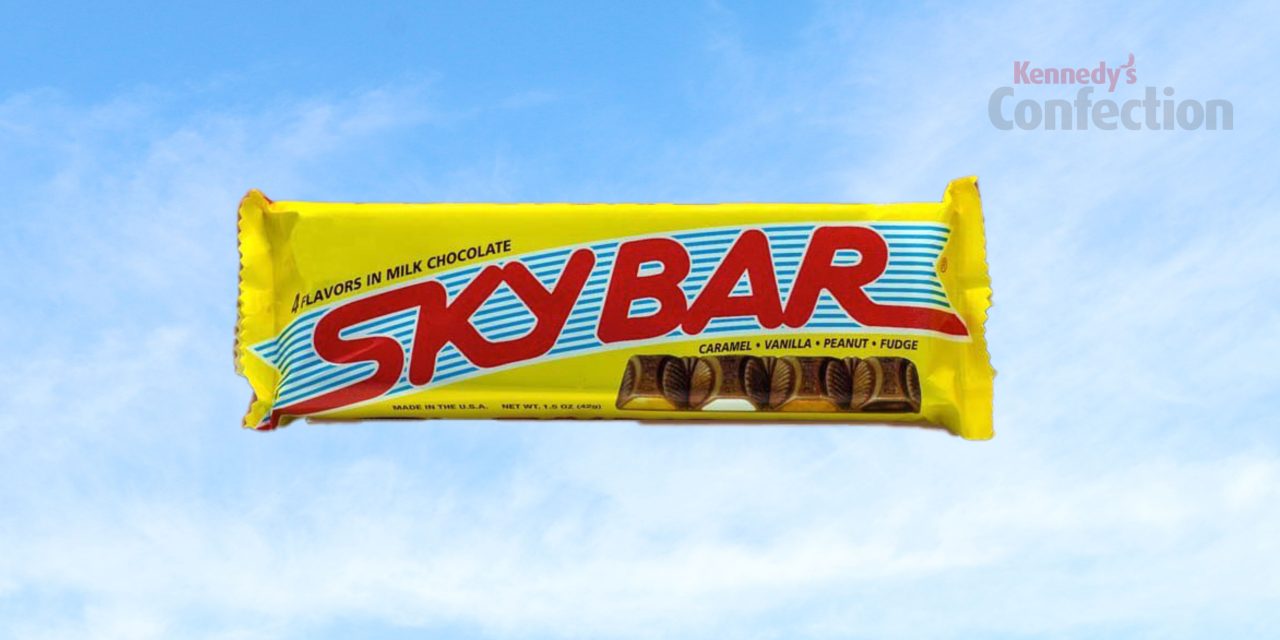
The Sky Bar was invented in 1938 by US-based confectionery company New England Confectionery Company (NECCO) and is reported to have been the first moulded chocolate bar to have multiple different flavoured centres. Chocolate bars of a similar moulded form started popping up around the early 1900s, but none had the same internal complexity of the Sky Bar, and it became the candy of choice for many families in the US.
Sadly, for this innovative candy bar, in the Autumn of 2018 NECCO, the oldest candy company in the United States at the time of its closure in 2018, filed for bankruptcy and auctioned off its assets. While many of its brands were acquired, no one seemed to want to take on the Sky Bar
Louise Mawhinney, the owner of Sudbury, Massachusetts based general store, Duck Soup, knew of the chocolate bar because so many of her customers loved it. “We put in a bid and became the owners of the Sky Bar brand,” said Louise. While the acquisition included all of the recipe formulations, it did not include any of the equipment needed to produce the bars.
“I learned later that the reason there were no other bids for the Sky Bar was due to its production complexity,” says Louise. The four sections of the chocolate bar each contain a different type of centre – caramel, vanilla, peanut and fudge.
The original NECCO process was highly automated on a complex chocolate moulding line that first deposited a milk chocolate shell. Then, four additional separate depositors filled each section of the chocolate shell. A final sixth depositor finished the backside of the chocolate bar. With so many depositors and multiple cooling towers, the industrial line was likely over 100 feet (30 metres) long. Replicating this process was simply not feasible for Louise.
In January 2019, Louise began to look for alternative methods to manufacture Sky Bars. She relied on the expertise of Jeff Green, a former NECCO R&D veteran, who had worked at the company for 30 years.
Around the same time, the retail space next door to Duck Soup became available, and in a stroke of luck, it was already zoned for light manufacturing. “It was a gift,” says Louise, who had been looking for manufacturing space outside the city. “Today we have so much cross over staff between Duck Soup and Sky Bar. Having our manufacturing located anywhere else would have been a nightmare.”
Space constraints
However, manufacturing next door to the shop meant that Sky Bar would need to adhere to some stringent space constraints. Initially, it appeared that the only solution would be a labour-intensive shell moulding process which would require operators to manually move moulds through a series of many moulding stations.
Before they took this route, Jeff contacted a fellow industry veteran, John Micelli from Egan Food Technologies, whose own history with NECCO projects helped the company’s engineers to create a compact bespoke automated moulding line for the Sky Bar.
The team designed a custom, five-section hopper for a modular moulding machine, with complex channelling routes and a sophisticated one-shot deposit plate to deliver the centres of the multi-flavour bar in a single deposit. The resulting compact, automated chocolate moulding line requires just one operator and fits well into the tight manufacturing space alongside the Sky Bar packaging machinery.
“We were really happy to have a brand-new piece of equipment that was custom made for us,” says Louise. “Trying to customise a used piece of equipment would have been a headache.”
Louise says that her team has now mastered the Sky Bar production line and the production quality rates now exceed industry standards. Louise has also increased production volume of the Sky Bar by purchasing a second set of chocolate moulds which allows the line to be run more regularly, without having to wait for a full set of moulds to be cleaned and sanitised.
It is estimated that the line is now able to produce around 3,000 bars in 45 minutes. Customers visiting Duck Soup can watch Sky Bars being made through the viewing windows that Louise has installed in the store. “We started with no experience, but today we’re probably the only people in the universe who know what we’re doing when it comes to Sky Bars,” she concludes.
Compact moulding line helps quadruple output
US-based Patsy’s Original is today probably best-known for its hemp-infused chocolates, which have grown so popular that the company needed to increase production volume by replacing its original chocolate moulding line.
Mike Niswonger, President at Patsy’s, set out to find a solution that would not take up too much valuable floor space. “We needed a machine that would fit in the area, and we had to think about the capacity of things like our tempering and melting tanks, and where to put products as they come off the line,” he says.
Egan Food Technologies was able to offer a solution with a moulding line that boasts all the functionality of an industrial chocolate moulding line, but which takes up far less space. “An industrial line would have required quadruple the capacity,” says Mike. “This one fit our needs and is less than 30 feet long.”
With the new moulding line installed, Patsy’s Original is able to manufacture all of its solid chocolate bars and chocolate minis on the line, as well as its one-shot peanut butter nuggets. Changeovers between chocolate products is easier thanks to on-board recipe storage, which wasn’t available on the previous line. According to Mike, production output has quadrupled and quality has improved with the Egan Food Technologies moulding line, while the per-employee labour costs have decreased.
Editorial contact:
Editor: Kiran Grewal kgrewal@kennedys.co.uk