
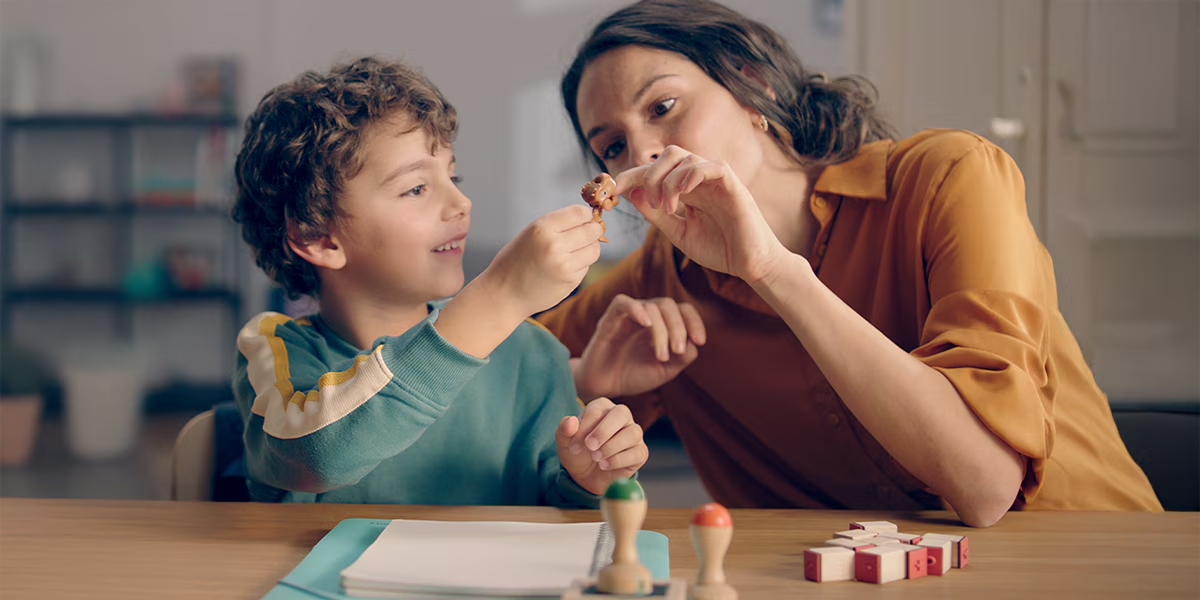
New research supported by Kinder UK highlights a growing play gap in the UK, with time pressures and limited awareness of play’s wider benefits preventing many families from experiencing its full value. Findings show that 57% of parents say time is the biggest barrier to play, while just 47% fully recognise the role of play in supporting children’s emotional development and family connection.
As well as this, the findings suggest that everyday pressures are making it harder for families to access moments of connection, with only a third (34%) saying their family plays together every day.
To help address this, Kinder and Action for Children are today, on International Day of Play, announcing a new two-year partnership, with the launch of a range of Play Breaks programmes to inspire play with families and children.
For over 50 years, Kinder has championed the role of supporting parents and children with play to inspire imagination, express emotions and build relationships. Through this strategic partnership with one of the UK’s leading children’s charities, Action for Children, the Kinder commitment is brought to families who are often facing the greatest barriers to play. This includes families experiencing external pressures such as stress at home (28%), financial strain affecting one in four households, as well as those facing isolation or caring for children with additional needs.[MA1]
At the heart of the partnership are three ways of helping families and children make play a part of everyday life, at home, in their communities and in inclusive spaces:
- Play Break Clubs, welcoming community sessions delivered by trained practitioners, where families can come together and experience play side by side with experts on hand and materials to continue to inspire play at home.
- Play Break Boxes, distributed to families nationwide through Action for Children’s network to support families in bringing simple, joyful play into everyday life at home; and
- Place to Thrive – Play Break Areas, inclusive play materials and dedicated spaces designed to support joyful and connected family play for children with special educational needs and disabilities.
Andrea Longobardi, Kinder UK Marketing Director, said: “At Kinder, we’ve always believed in the value of play and how it can help support families and help children grow, connect and build confidence. We know that play is an important part of supporting family bonding and our Kinder Play Breaks initiatives help to celebrate those quality moments together. The opportunity to work proudly in partnership with Action for Children to help more families experience those bonding moments through play is fantastic. Together, we are excited to help bring play back into homes and communities.”
Katherine Woods, Director of Fundraising at Action for Children said: “Play is more than just fun – it’s how children and their families build trust, strengthen relationships and grow in confidence together. For many families, opportunities to play aren’t always easy to access and when life is increasingly busy or tough, it can be the first thing to slip away.
“That’s why we’re proud to be partnering with Kinder to help children and caregivers to connect, engage and grow together through play. Our new programme will help bring the importance of play into everyday life, so more families can experience connection, confidence and regular moments of joy.”
This new UK partnership comes on the same day as Kinder also announces new global research from its Kinder Value of Playpanel, made up of recognised experts in play and childhood development dedicated to exploring how play supports socio-emotional growth and family connection. The new data explores the science behind shared play and its impact on family connection. The study, led by panel member Professor Sam Wass, Director of the Institute for the Science of Early Years at the University of East London, found that shared play creates near-instant connection and bonding between parents and children, with heart rate synchrony improving from a 14-second delay to just 4 seconds during play, highlighting the benefits of adding more little moments of play into our lives.