
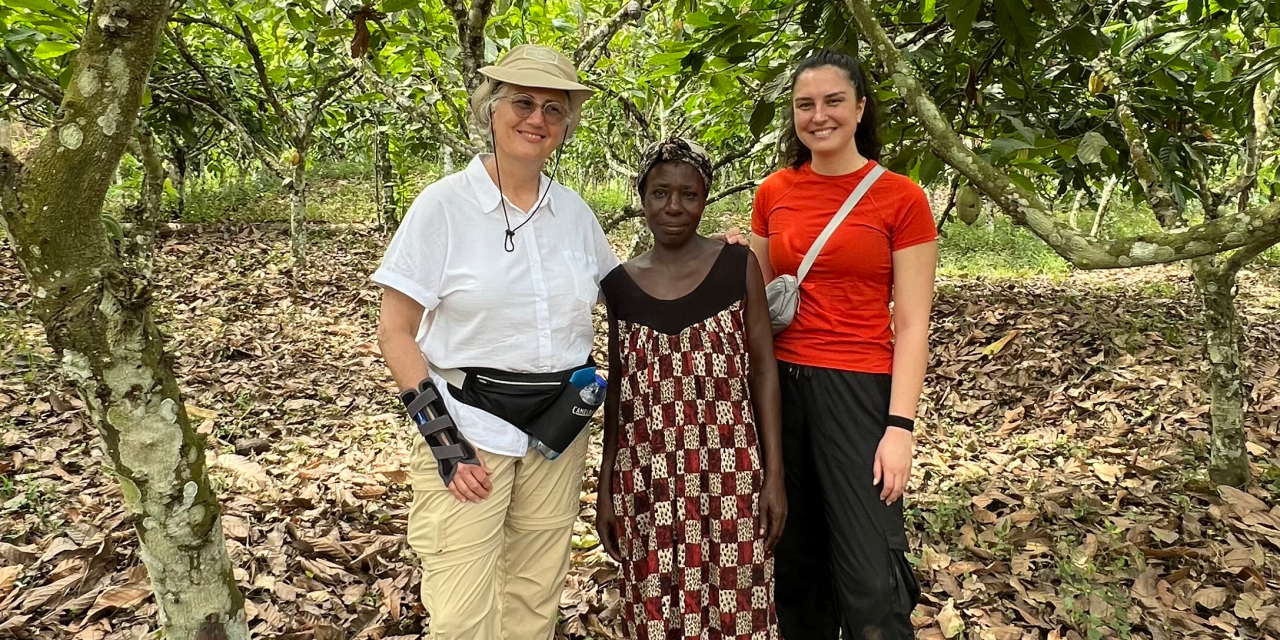
Seattle Chocolate’s Women for Chocolate initiative is making meaningful change in Ghana’s cocoa communities. Jean and Ellie Thompson, the mother-daughter duo at the helm, share their journey with Kennedy’s Confection Editor, Kiran Grewal.
Jean and Ellie Thompson, the progressive mother-daughter team behind Seattle Chocolate, share their story behind the impactful Women in Chocolate initiative with Kennedy’s Confection Editor, Kiran Grewal. Founded to address the gender inequality within the chocolate supply chain, this initiative focuses on empowering women across the cocoa-growing regions by offering financial support, mentorship, and resources aimed at promoting sustainable farming practices and diversifying incomes.
Through their work, Jean and Ellie have brought attention to the challenges faced by women in cocoa farming communities, particularly in Ghana, where the Women for Chocolate program is creating meaningful change. By partnering with local organisations, Seattle Chocolate is helping provide much-needed resources such as water access, financial literacy training, and income diversification opportunities to cocoa farmers, with a focus on female empowerment.
In this interview, Jean Thompson, CEO of Seattle Chocolate, shares the inspiration behind the Women for Chocolate program in Ghana, the key challenges faced during implementation, and the successes that have emerged. Ellie Thompson, Seattle Chocolate’s Brand Manager, reflects on her own experience visiting the farmers and how this initiative has shaped her perspective on ethical sourcing and sustainability. Together, they offer an authentic viewpoint at the program’s impact and their vision for a future where women in the chocolate industry thrive.
What was the inspiration behind launching the Women for Chocolate program in Ghana?
Jean Thompson: We have always wanted to help the farmers in Ghana where our cocoa for our Seattle Chocolate milk and white chocolates are sourced. Because of the way the government is set up in Ghana, you cannot trade directly with the farmers to ensure they are being paid well. We worked with Specialty Cocoa and Chocolate consultants to ask the farmers what would be most helpful. They replied water, a seedling nursery and some income diversification. We were able to secure a partnership with an NGO in Ghana called Rikolto and a Belgian government backed grant that they are implementing to help Ghanaian farmers by partnering with private companies. All our products donate 10% of net profits to help women and girls, so we diverted the funds to Ghana, and they generously match (x2!) our donations to give a substantial donation to farmers in Ghana. We selected an organic coop in remote eastern Ghana called Three Mountains Cocoa because they had the necessary organization and infrastructure to work with Rikolto to implement the programs. It’s been even more gratifying because we are importing 150K pounds of cocoa from this very coop in 2025 to make our Seattle Chocolate dark chocolate making it a win-win in every way.
Could you share some key challenges and successes you encountered while implementing the Women for Chocolate program?
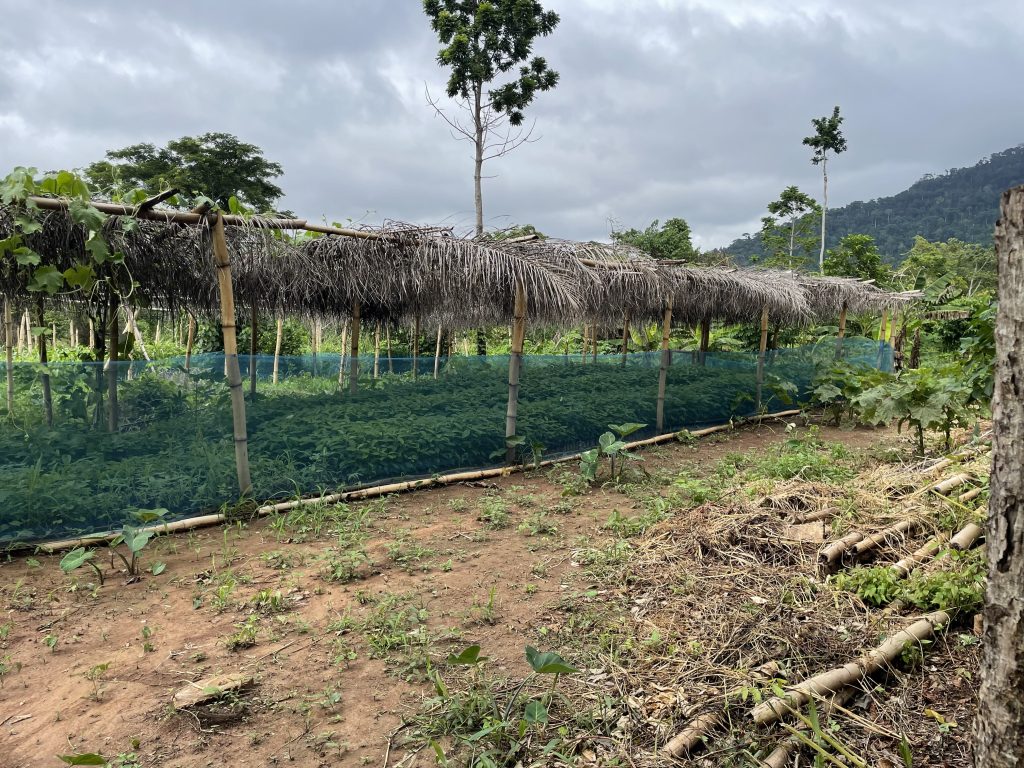
JT: Things are never easy or seamless when you’re working with farms so far away. Even transferring the money was not easy as the banks didn’t wire in their currency (Cedi), and it caused weeks of delay. Rikolto has done an outstanding job of launching the program, but report that even gathering these busy farmers for instruction on Village Savings and Loan (VSLA) is tricky. Each coop has days when they do not work for rest and religious reflection. Those days vary by farm, so the trainers often must stay for days to ensure that each farmer is given instruction. Despite these initial bumps in the early stages, things are moving along very well, and we have already planted a seedling nursery with cocoa, shade tree and other trees for income diversification. And we have dug two bore holes for wells to be closer to the villages to relieve the burden of fetching water which typically falls on women and children. The wells are also important for the seedling nursery and for other endeavours like pig farming which help the farmers enjoy income over more months.
“We’ve always wanted to help the farmers in Ghana where our cocoa is sourced. Through Women for Chocolate, we’re not just funding projects—we’re changing lives by giving women access to water, financial education, and the tools to build sustainable futures.”
Jean Thompson, CEO, Seattle Chocolate
What were some surprising insights or experiences you gained from your recent trip to Ghana that you hadn’t anticipated?
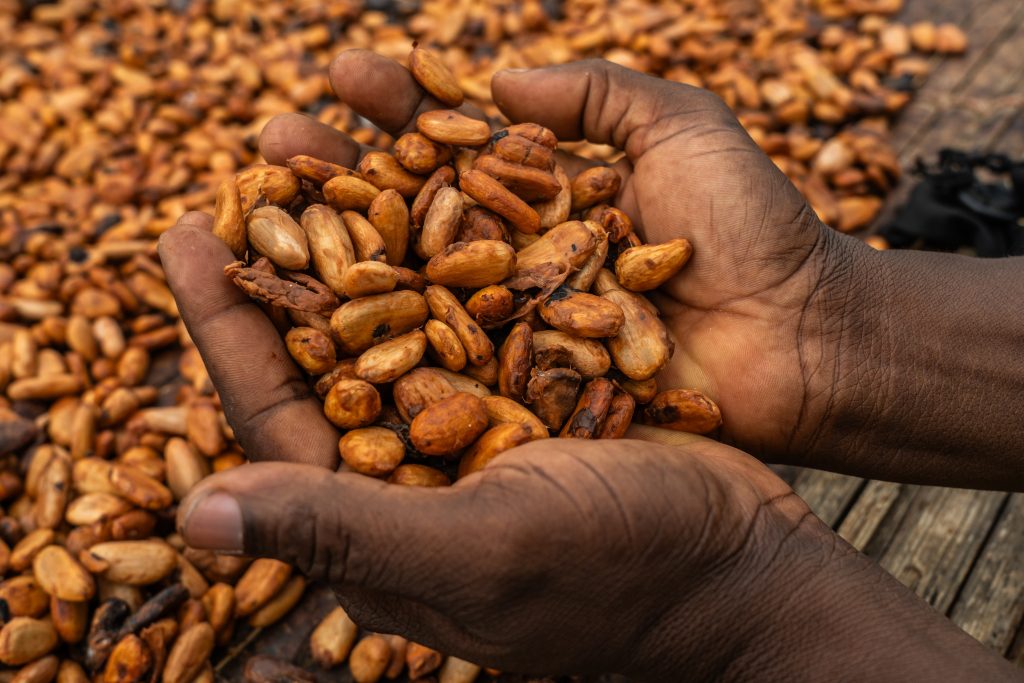
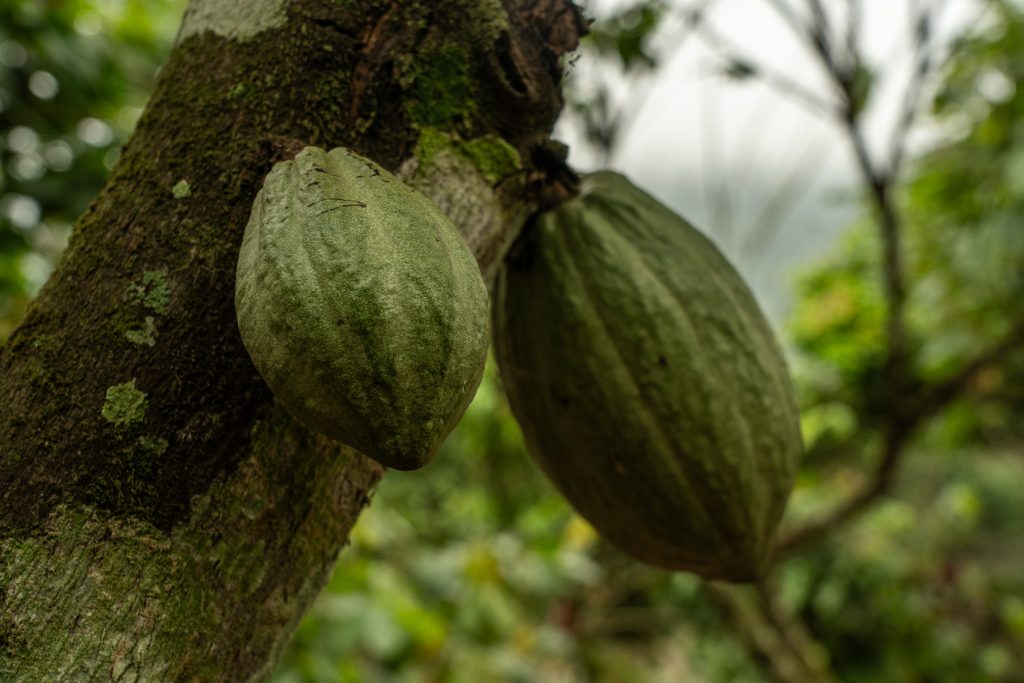
JT: Ghana is a country with so much natural beauty but with more than its share of struggle. The people are kind, welcoming and curious. We hired a driver to take us into the bush and we still correspond to this day on WhatsApp. The drive was long and the roads rough. You can’t take our basic privileges for granted in Ghana: running water, air conditioning, paved roads, availability of a place to get food. These were things we experienced and for the locals, the list is far more extensive. After many hours of driving, we arrived at the beautiful jungle home of the Three Mountains Cocoa cooperative deep in the heart of the eastern region. It was March and extremely hot, dusty and humid but we were met by all the village chiefs for a welcome ceremony, to thank us for digging a bore hole for a well and funding a seedling nursery. They dress in beautiful, brightly coloured and patterned traditional garb. Unlike the rest of Ghana, English is not their primary language and even in this small area, there were a variety of languages spoken. They passed a bottle of local liquor around to toast us and when we took a swig, they burst out laughing, surprised that delicate Americans would partake in this tradition early in the day. One of the chiefs who spoke a bit of English invited my 27-year-old daughter to stay and help farm but told me it was OK for me to leave. He mentioned it a few times, always with a smile. We went to visit a few farms, including one owned by the only female chief, the Queen Mother, who was a tiny woman about my age farming a 5-acre parcel entirely by herself. It was not harvest season so the pods remaining on the trees looked dry and rotten, a problem that Ghana and the Ivory Coast are struggling with because of climate change and its unpredictable rainfall.
My favourite experience happened at the end of the school day when we were in the village of Ashanti. A small boy of about 8 was walking home and I asked how his day was, and he smiled and continued to look at me as if he wanted to engage. After walking away, he stopped and turned around and pulled a certificate out of his backpack and held it out to see if I was interested. We walked over and it he proudly shared his award for 3rd place in the 100-meter dash.
It was an incredible experience to see how these cocoa farmers live and how hard they work and how far their harvest is from the ports where their beans are sold to people like us very far away. We are excited to see the Women for Chocolate program take root and make a difference in the lives of these hard-working farmers.
Ellie, as Brand Manager for Seattle Chocolate, what role did you play in the Women for Chocolate initiative, and how did it influence your perspective on sustainable and ethical sourcing?
Ellie Thompson: I travelled to Ghana to see the impact of our investment, and had the opportunity to meet the farmers, see how they live and get a sense for how hard everything is there. As the brand manager for Seattle Chocolate, this makes our commitment to donate 10% of our net profits to women in Ghana feel so worthwhile. I felt their need and am committed more than ever to making this brand a success so our donations can go farther and in turn, do our part to ensure the success of cocoa in the future.
Can you share a particular moment or story from your trip to Ghana that resonated deeply with you?
ET: Before heading to the bush, we visited Cape Castle, one of the places hundreds of thousands of Africans (prisoners of war or petty thieves) were launched into slavery to the Caribbean and North America. It’s a horrid part of our world history that we believe is firmly in our rearview mirror. But what struck me was that these roots still leave a mark in Ghana. There is still government involvement and limiting of trade and suppression of income for the cocoa farmers there. They still live impoverished lives that feel desperate by comparison to ours. It really bolstered my commitment to the Women for Chocolate program, which gives us the opportunity to help in meaningful ways.
How do you envision the future of the Women for Chocolate program and its role in promoting gender equality in the cocoa industry?
ET: We feel fortunate to have the backing of Rikolto and its grant from the Belgian government to help in a place so far away. We will continue to ask the farmers what they most need and how we can best help. It is primarily the women and girls who must fetch the water from great distances, so building wells in the villages frees them up to do more. We also met three separate women who are responsible for farming their entire plot of land (5 acres or so) by themselves. The VSLA program teaches them to save their money and allows them to diversify their activities to add to their income and spread the money out over more months. We know women reinvest in their communities and investing in them, carries great promise for the next generation of cocoa farmers.
And finally, a question for both of you: In what ways has the Women for Chocolate program changed or influenced the practices and values at Seattle Chocolate?
JT & ET: We’ve always worried about the cocoa farmers, and Women for Chocolate gives us the ability to help them in a real way. In 2024 we began making our own dark chocolate in-house which gave us the ability to source directly and pay farmers a fair price. The Women for Chocolate program supplements these efforts in areas where direct trade is not allowed (Ivory Coast and Ghana). We pay a lot more for our cocoa and chocolate than we did when we bought from a large corporation, but it fits in much better with one of our key corporate values “to defend the planet and empower the underserved”.
Image credits: Seattle Chocolate: Ghana Progress Report



Editorial contact:
Editor: Kiran Grewal kgrewal@kennedys.co.uk

