As cocoa prices soar and sustainability concerns mount, Win-Win is fermenting a new future for chocolate, without using a single cocoa bean. Kiran Grewal reports.
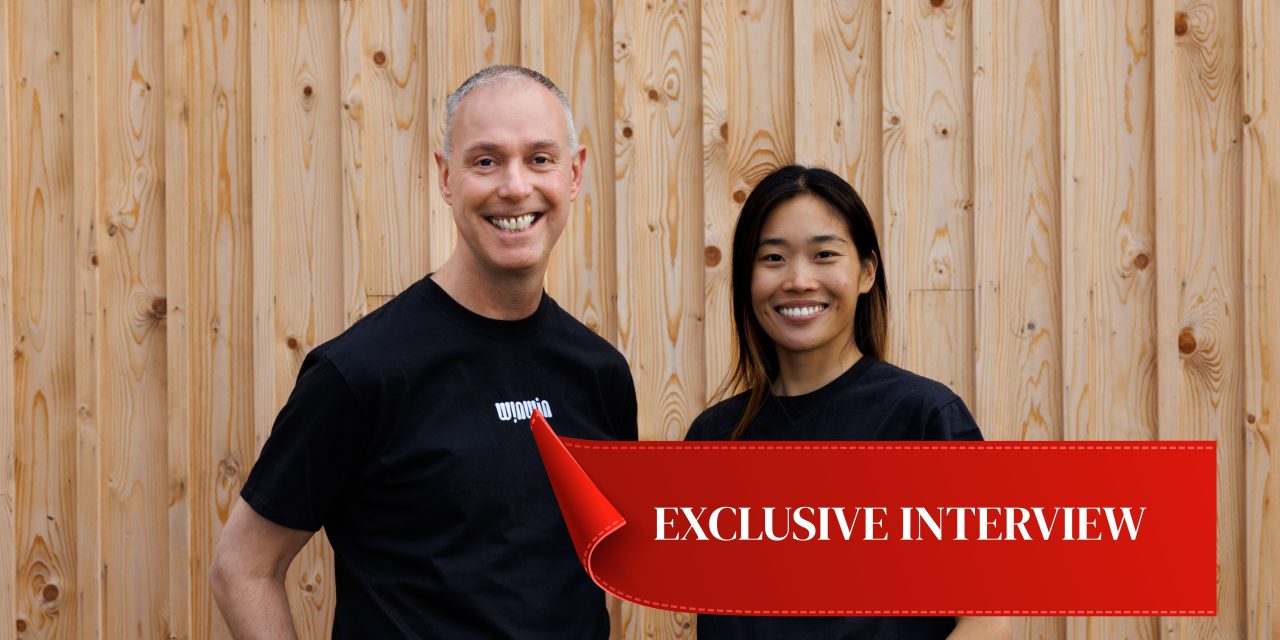
With cocoa prices soaring, deforestation concerns rising, and the confectionery sector under pressure, Win-Win is introducing a solution we are seeing more and more of in today’s world: chocolate without the cocoa. We sat down with Mark Golder, CEO of Win-Win, to talk about the company’s groundbreaking cocoa-free chocolate alternative, how it works, and where it’s heading.
So, what inspired you to create a cocoa-free chocolate and how did the idea for Win-Win come about?
Mark Golder: I’ve been with Win-Win now since January, so six months. The original founders are Ahrum Pak and Johnny Drain. First of all they were passionate about sustainability and making a difference, and Johnny also was a fermentation expert. He started to notice through his work, originally with potato skins, that when he was boiling potatoes, he got this kind of chocolaty aroma.
The key issue we’re tackling is flavour — which is actually made up of compounds detected through our nose and throat. Interestingly, the same flavour compounds can come from surprisingly different sources. That’s where the collaboration came from: Ahrum is deeply passionate about sustainability, Johnny brings deep knowledge of fermentation, and they both recognised a critical issue in the chocolate industry.
If you’re working in chocolate today, anywhere in the world, your business is essentially in constant crisis. Conventional chocolate relies on cocoa, which only grows in a narrow band around the equator. The vast majority of the world’s cocoa comes from West Africa, with some from Central America. But climate change is severely impacting the cocoa plant, yields are falling as temperatures rise. Unfortunately, that’s not likely to improve in the short or medium term.
So, with the climate heating up, cocoa plants are suffering, and yields are dropping. That has a knock-on effect on availability and pricing. Chocolate companies globally are facing pressure, they’re either raising prices, shrinking product sizes, or both. This is something you’ll see frequently in the news — “shrinkflation” is a regular topic. It was KitKats in The Grocer this week.
On top of that, cocoa doesn’t have great sustainability credentials. A vast amount of rainforest — particularly in West Africa — has been cleared in the past 20 to 30 years. In fact, about 80% of the West African rainforest has been lost since 1990. And there are around 1.5 million child labourers involved in cocoa production in Africa.
So chocolate has both commercial and environmental challenges. Prices are rising, supply is decreasing, and there are serious social and sustainability concerns. Yet chocolate consumption is rising, not just in traditional markets like Europe and North America, but also in emerging markets like India, where growing affluence and infrastructure improvements (like chillers) are increasing demand.
This is why Win-Win exists: to bridge the gap between rising demand and declining, problematic supply. We’re not here to stop the cocoa trade, there will always be a place for high-quality, premium cocoa. But most of the chocolate applications globally could be made with Win-Win’s solution — and in many cases, people might even prefer it. Especially when they learn that our product involves minimal deforestation, minimal child labour, 82% fewer carbon emissions, and 80% less water usage.
Can you talk me through the fermentation process? What kind of taste profile it has and what responses have you had from consumers and chefs alike?
MG: That’s the key question — it’s what sets Win-Win apart. In fact, our fermentation process is so unique we have two patents on it. I can’t share all the details, but the basics are this: conventional chocolate making involves fermenting cocoa beans in the sun, which creates those classic chocolate flavours.
We’ve developed a very specific fermentation process that uses other ingredients — cereals and legumes that are abundant around the world — to generate the same flavour compounds you get from cocoa. We’re not touching cacao at all.
With the help of our brilliant team of scientists, we’ve figured out how to use ingredients like rice or barley to produce that familiar chocolatey taste. Then we combine that with the typical ingredients found in chocolate, resulting in a cocoa-free chocolate alternative that looks, tastes, and performs like the real thing.
What kind of responses were you getting at iba? I know that there were people trying samples — what did you hear?
MG: The response has been fantastic. On the first day, we were telling people that it was a cocoa-free alternative, and you could see their curiosity and scepticism. But by the second day, we stopped saying that up front and just let people taste it. The results were incredible.
When people know it’s cocoa-free, they usually go through a few stages. First, curiosity — often with some doubt. They try it, and at first there’s this pause. Then a smile breaks out. Sometimes they even laugh. “Oh my goodness — if you hadn’t told me, I wouldn’t have known,” is a common reaction.
That’s exactly what we aim for. Of course, every chocolate tastes slightly different, whether it’s made with cacao or not, but most people absolutely love it and respond very positively.
And what challenges have you faced in getting retailers, manufacturers, or even consumers, would you say, to embrace cocoa-free chocolate?
MG: The main challenge is consumer understanding. Retailers and manufacturers ultimately want to know if their customers will pick it up from the shelf. So taste is crucial and we spend a lot of time sampling and testing.
Legislation is another issue. In most countries, something must contain cocoa to legally be called “chocolate.” Our product has zero cocoa, so in the UK and Europe, we can’t call it chocolate. That’s why we use the term “cocoa-free chocolate alternative.” A big part of what we’re doing now is helping people understand how beneficial that alternative is both in terms of sustainability and taste.
Consumer awareness is a hurdle. People often make assumptions about what a cocoa-free chocolate will taste like, without knowing the process or the outcome. That’s one reason we’re not too precious about putting “Win-Win” on every product just yet. If a delicious chocolate-covered biscuit or panettone is made with Win-Win, that’s good enough for us — because we know we’re making a difference.
Over time, as cocoa prices keep rising and products keep shrinking, consumers will start to ask questions. And when they do, we’ll be ready with the answers and with a better solution.
You’ve mentioned shrinkflation and price volatility affecting the chocolate market. So how do you see Win-Win reshaping the economics of chocolate production and supply?
MG: When I speak to customers, I describe this as a food security issue. It’s not about survival — no one’s going to starve without chocolate — but in many markets, people really count on it. Chocolate is a comfort, a treat, and a ritual.
I believe we’ll see cocoa increasingly reserved for premium, fine chocolate, the special occasion bars we’re willing to spend more on. Win-Win will become the go-to solution for everything else, especially the mass-market products that currently rely on an unsustainable ingredient.
Consumers will benefit because the chocolate they love won’t need to get smaller or more expensive. Manufacturers benefit because Win-Win works just like chocolate, it behaves the same way in production, so there’s no need to reformulate or redesign processes. In fact, it frees them up to focus on innovation again, instead of worrying about price spikes or availability issues.
And then looking ahead — what’s next for Win-Win? Are you planning to expand your product line, scale internationally, or collaborate with big name brands?
MG: In chocolate, we’re focused on scaling, innovating, and partnering with big-name brands. Many chocolate businesses are household names — and we expect to work with them. Right now, we’re operating B2B, selling to manufacturers. We don’t yet have a consumer-facing range, although that might come eventually, to help people understand who we are and what we offer.
To really drive change, the industry as a whole needs to convert to Win-Win. That means we’re developing a broad range of product types — different levels of milk or dark, different formats like powders or liquids — similar to what large chocolate suppliers offer today.
But our fermentation technology isn’t limited to chocolate. We’re also exploring other ingredients like coffee and vanilla. These are crops that grow in similar conditions and face similar challenges with climate change and sustainability.
While chocolate is our focus right now, there’s huge potential to bring the same approach to other unsustainable food systems. So watch this space.
It’s really any commodity market, isn’t it, that is struggling right now due to things like climate change and demand.
MG: These flavour crops — chocolate, coffee, vanilla — grow in similar regions and share similar vulnerabilities. Over centuries, we’ve developed a deep love for these foods.
Having spent my whole career in the food industry, I care deeply about flavour and sustainability. Food is central to how we live, celebrate, and connect. It brings people together. I’m proud that we’re creating a product that delivers all of that, while being far more sustainable than conventional chocolate.
Editorial Contact:
Editor: Kiran Grewal kgrewal@kennedys.co.uk