
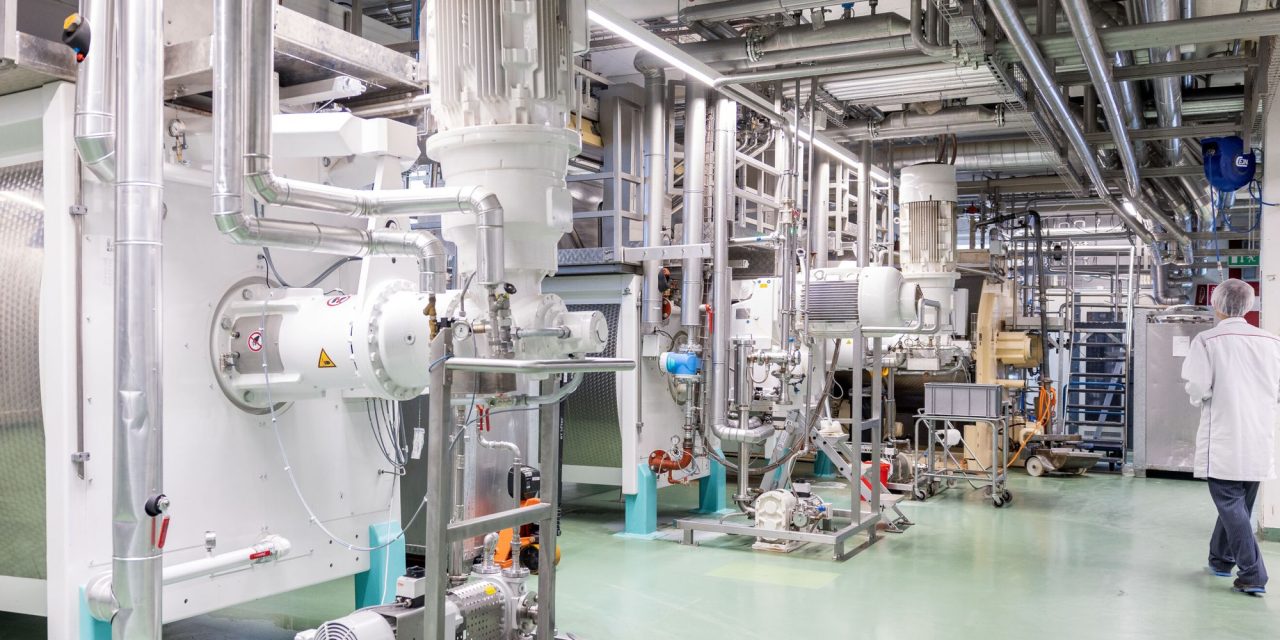
For over 170 years, Maestrani Schweizer Schokoladen AG has been delighting consumers worldwide with its chocolates. Their digital transformation with Bühler has already delivered an impressive 18 percent boost in efficiency – laying the groundwork for an even sweeter future.
Set among the rolling hills of Flawil, Switzerland, Maestrani’s production facility is home to the “Chocolarium World of Discovery,” drawing 230,000 visitors annually. Behind this immersive experience, the company produces over 4,500 tonnes of chocolate yearly for its flagship brands—Minor, Munz, and Maestrani. Committed to innovation, the family-owned company has partnered with its neighbor, Bühler, to harness digitalization, boosting efficiency by 18% and reshaping its approach to operations.
Embracing digitalisation
“Our history is built on family values, innovation, and continuous improvement,” says Maestrani CEO Christoph Birchler. “To offer the high-quality products our consumers love, we need to be faster, more adaptable, and ready for future challenges.”
Before digitalisation, Maestrani’s production relied heavily on operator experience without full visibility into inefficiencies. In 2016, the company took its first steps toward transformation, implementing intelligent sensors and Bühler Insights—a data analytics platform aggregating information from sensors, machine controls, and offline sources.
By modernising control systems, Maestrani transitioned from guesswork to data-driven decision-making. “Once we had the data, we were excited to see what we could do with it,” says Carsten Engelhardt, Technical Director at Maestrani.
Data-driven optimisation
Through Bühler Insights, Maestrani identified a bottleneck in its five-roll mill that was causing suboptimal grinding. Analysing various scenarios, the team introduced targeted interventions, including a new conveyor belt that optimised mixer emptying and improved mill performance.
“With this data-informed approach, we made adjustments that significantly boosted production efficiency,” explains Sudhir Punyamurthula, Data Analyst at Bühler. “We expected gains, but the results exceeded expectations.”
The improvements led to a nearly 20% efficiency boost, transforming Maestrani’s problem-solving approach. “Previously, we suspected things could run smoother but couldn’t pinpoint the issues,” says Engelhardt. “Now, we have real insights, enabling us to make precise changes and see immediate impact.”
The future of smart chocolate production
Beyond efficiency, Maestrani envisions a fully connected factory where machine intelligence, personnel, and data flow seamlessly to optimize production. Upcoming steps include enhancing traceability, refining conching, and automating mass production with minimal manual intervention.
One pressing challenge is the shortage of skilled personnel. “Using insights from data to guide operators, rather than relying solely on experience, is crucial,” Engelhardt explains. “Smart systems optimise processes while freeing up employees to focus on higher-value tasks.”
Bühler’s digital expertise has been instrumental in this transformation. “When Bühler began exploring digitalisation, Maestrani was the ideal partner due to their openness to innovation,” says Fabian Dintheer, Digital Program Manager at Bühler.
A strategic partnership
The integration of Bühler Insights has reduced manual interventions, streamlined operations, and optimised resources at Maestrani. “Our machines now communicate better, allowing us to prevent disruptions and improve recipes,” says Patrik Keller, Head of Production & Logistics.
The collaboration, dating back to 1985, has evolved into a strategic partnership. “Maestrani may be one of Bühler’s smaller customers, but as direct neighbors, we’ve become one of their most engaged partners,” says Birchler.
More than just increasing output, Maestrani’s digital journey is about smarter, more sustainable production. “This data-driven approach ensures we not only meet market demands but continue to innovate and thrive,” Birchler concludes.
Editorial contact:
Editor: Kiran Grewal kgrewal@kennedys.co.uk

