
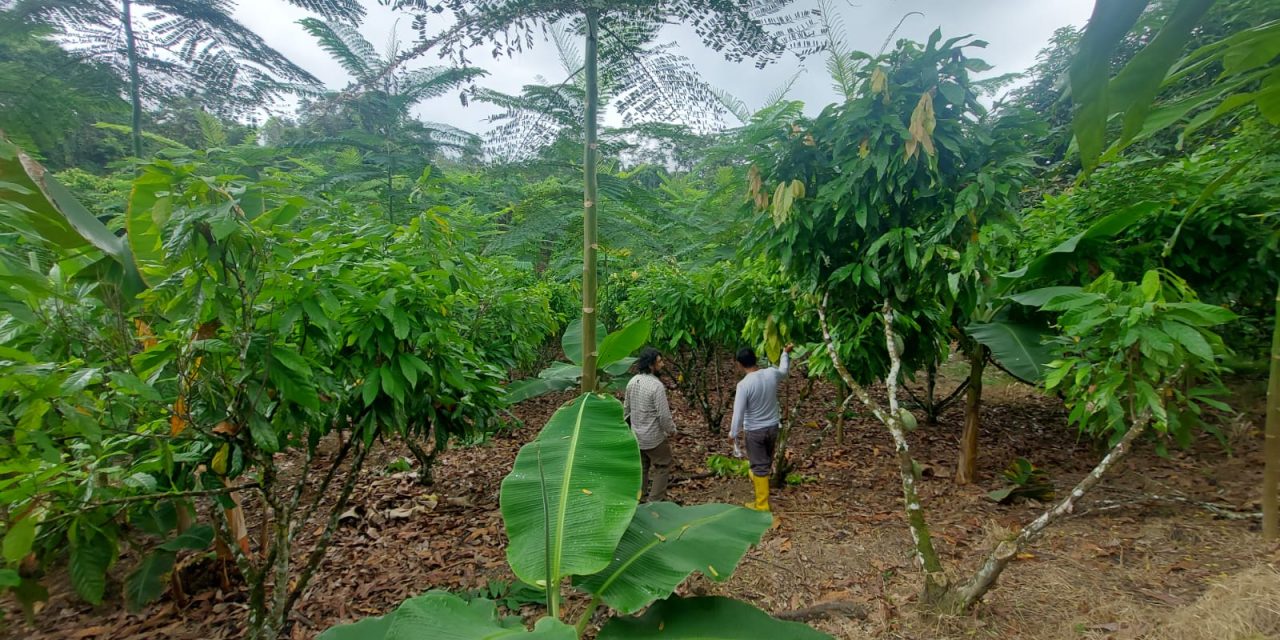
A new low-carbon agriculture initiative has been launched in Ecuador to support cocoa farmers in mitigating and adapting to the effects of climate change. The project is a collaboration between global food and beverage ingredient supplier ofi, international NGO Rikolto, and the German Development Agency GIZ, commissioned by Germany’s Federal Ministry for Economic Cooperation and Development (BMZ).
Co-funded by BMZ and ofi, the three-year initiative aims to train 2,800 cocoa farmers in climate-smart agricultural practices. With approximately 1.7 million Ecuadorians relying on cocoa for their livelihoods—60% of whom depend on it as their primary source of income—unpredictable weather patterns pose a significant risk to production and economic stability.
A key component of the project is the implementation of agroforestry, a regenerative farming approach that integrates cocoa cultivation with other plant species. This technique is expected to improve cocoa yields, enhance biodiversity, and provide additional income opportunities for farmers, while also sequestering carbon and reducing the environmental impact of cocoa farming.
Training will be conducted through 600 tailored coaching sessions, or “field schools,” with at least 20% of participants being women. The program will also include the distribution of 40,000 plants from the rare and native Nacional cocoa variety, cultivated within an organic cocoa production community nursery.
The initiative will leverage ofi’s AtSource sustainability management system to generate insights and best practices, which will be shared with Ecuador’s national authorities, including the Ministry of Agriculture and Environment, to inform climate policies. The project aligns with Ecuador’s REDD+ Action Plan, “Forests for Good Living” (2016-2025), which seeks to reduce deforestation and promote sustainable land use.
Speaking on the initiative, Paula Andrea Rueda Peña, Sustainability Manager ofi Ecuador, stated: “Together with GIZ and Rikolto, we’re strengthening the sustainable cocoa supply chain in Ecuador, making it more resilient to climate change while lowering its environmental footprint. By integrating low-carbon agriculture into our sustainability programs, we are supporting smallholder farmers in enhancing productivity and progressing toward a living income.”
Jose Luis Cueva, Cocoa Project Coordinator at Rikolto, emphasised the broader impact of the initiative: “Sustainable implementation through climate-smart cocoa agroforestry systems will generate a triple impact—improving production, addressing climate change, and ensuring a living income for farmers. At Rikolto, we believe that capacity building, innovation, and sustainability are key to improving the livelihoods of cocoa producers.”
Ralf Buss, Project Manager of GIZ AgriChains Ecuador, highlighted the importance of cross-sector collaboration: “Climate change and biodiversity loss are global challenges that require joint solutions from multiple stakeholders. Strategic alliances between the public and private sectors are essential in developing innovative projects that promote low-emission agriculture and enhance climate resilience in food and farming systems. This initiative supports Ecuadorian cocoa producers while strengthening sustainability in the global cocoa supply chain.”
The official launch event took place in Quito and was attended by representatives from Ecuador’s Ministry of Agriculture and Livestock, the Ministry of Environment, Water and Ecological Transition, and the German Embassy in Ecuador, alongside key industry stakeholders.
Editorial contact:
Editor: Kiran Grewal kgrewal@kennedys.co.uk

