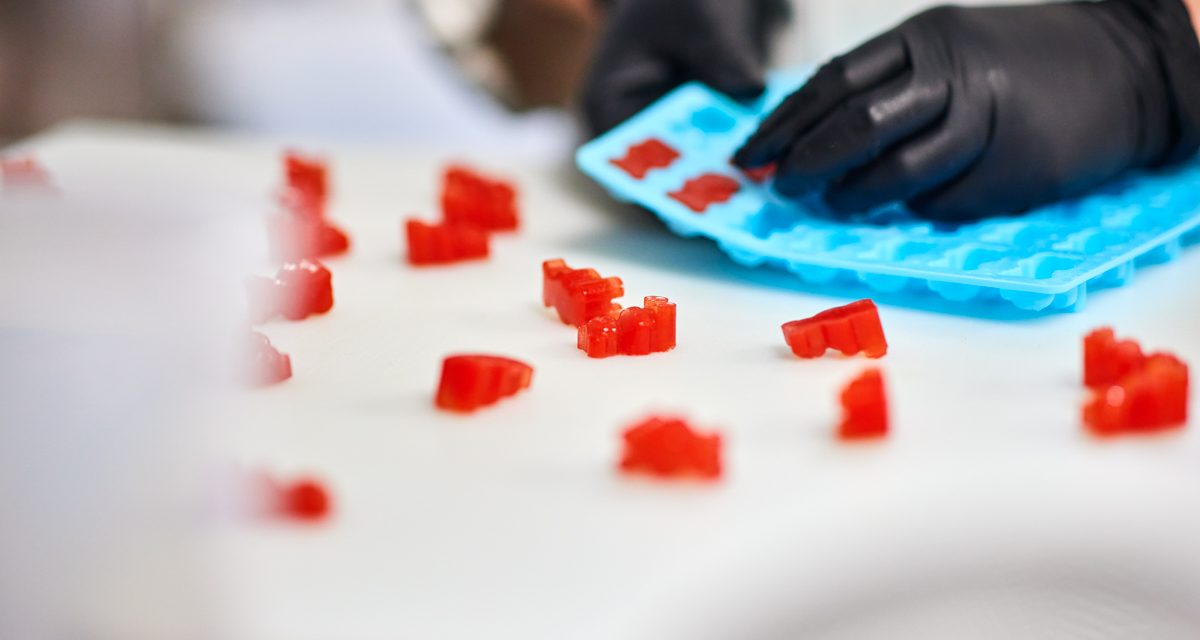
Although there is much complexity around recipe reformulation for plant-based ingredients, specialists like GNT and ADM say the quality is unmatched and it is the future of colours and flavours in confectionery.
According to Innova Market Insights, 70% of European consumers say it is important that foods and beverages do not contain artificial colouring, while nearly one-third are willing to pay a premium for products formulated without them. Meanwhile, the global natural food colours market is projected to exceed US$3 billion by the current year 2026, fuelled by reformulation efforts across confectionery, bakery and beverage categories. In flavours, the trend is equally pronounced: market analysts estimate that natural flavours now account for more than half of new confectionery launches in Europe, reflecting consumers’ preference for recognisable ingredients and authentic taste experiences.
As this feature explores, the industry is responding with remarkable innovation. Suppliers such as ADM and GNT are developing advanced extraction, masking and stabilisation technologies that allow colours derived from fruits, vegetables and plants to achieve greater vibrancy, consistency and shelf-life performance than ever before. At the same time, flavour houses are capitalising on emerging consumer desires for both wellness-inspired profiles—think matcha, honey and tropical fruits—and adventurous combinations such as passion fruit with vanilla or mango sticky rice-inspired gummies.
Newstalgia dreamland
Clara Faustina, Senior Marketing Manager, Sweet Goods and Bakery EMEA, ADM, tells us more about ADM’s unique insight into the trends and preferences of consumers within the confectionery market. She says: “Across categories, consumers increasingly demand clean-label products made with recognisable ingredients perceived as ‘closer to nature.’ About 70% of European consumers say it’s important their foods and beverages do not contain artificial colouring, and nearly 30% are willing to pay more to avoid them. Within sweet snacks like candies, chocolate bars, gummies, packaged biscuits and more, consumers state ‘natural flavours’ (70%) and ‘natural colours’ (66%) contribute to perceiving the product as ‘natural’.
Concurrently, wellness-led choices continue to influence demand, which is represented in ADM’s identified “Authentic Wellbeing” trend for 2026 flavours and colours. Clara continues: “Consumers may gravitate toward tropical or citrus flavours when also seeking products for energy, whereas honey and tea resonate with those prioritising relaxation. Our expert flavourists respond through sophisticated flavour layering, including leveraging flavour extracts like from-the-named-fruit (FTNF) solutions. This is reflected in concepts like strawberry matcha gummies or mango sticky rice-inspired gummies.
“Consumers also embrace bold, unexpected combinations, which we dub as the “Give Me More” trend. Think passion fruit with vanilla, paired with vibrant, unconventional colours like striking blues and greens. Texture further elevates these experiences, with inclusions like fruit granules, fillings and textured soy crisps adding another layer of indulgence,” she adds.
Familiarity also still matters. In Europe, 64% of consumers state “traditional” flavours they know and trust are influential in their food and drink choices. Clara notes: “Classic flavours and colours are now being reimagined through a modern lens, tapping into the “Newstalgia Dreamland” trend – where comforting, recognisable profiles combine with contemporary twists to deliver both emotional connection and innovation, such as the sweet brown notes of caramel popcorn pralines.”
The complexity of application formulation
Working with any colour or flavour – whether synthetic or derived from a natural source – may pose technical hurdles, depending on the application formulation. Specifically, when confectionery manufacturers look to transition from artificial dyes to colours derived from natural sources, key hurdles can arise, such as shade matching, stability, maintaining stability, managing cost-in-use and ensuring compatibility across different product formulations. Clara agrees: “Delivering desired vibrancy, intensity and uniformity with ingredients derived from natural sources can be complex. These attributes are sensitive to product development conditions such as heat, light exposure and pH variations, all of which can impact both visual appeal and flavour integrity over time.”
“Supply reliability and scalability can also be key concerns. Since raw materials depend on specific climates and agricultural conditions, sourcing can be inherently variable, impacting both consistency and reliability,” she adds.
With integrated, turnkey solutions, Clara believes ADM are paving the way for confectionery brands embarking on the endeavour of using ingredients derived from natural sources. “Our Colors from Nature™ portfolio uses advanced extraction and formulation technologies to deliver a full rainbow of consistent, stable and versatile colours. Our expertise in natural raw materials combined with advanced extraction, deodorisation and masking technologies plays a critical role in improving sensory performance,” she explains. “These capabilities ensure that colours derived from natural sources do not carry inherent off-notes or off-aromas. Plus, our extraction technology removes starches, sugars and proteins for more consistent batch-to-batch performance. Complementing this, our emulsion technology enables manufacturers to formulate with heat- and light-stable systems that ensure even distribution.
“Additionally, our flavours portfolio is where nature meets precision, translating nature into reliable flavours, ingredients and solutions. A key example is our TasteSpark® flavour modulation solutions, including TasteSpark® Masking and TasteSpark® Mouthfeel, which help neutralise unwanted notes and build in the richness confectionery consumers expect. These solutions can be labelled simply as “Natural Flavour” in many countries, helping brands meet clean label expectations while elevating taste.
She goes on to say how these technologies are supported by their broader capabilities, which is an equally important factor. “By combining formulation expertise with vertically integrated sourcing and global supply partnerships, we help mitigate the variability often associated with raw materials. Powered by a continuously evolving toolbox of innovations, our development and technical support teams deliver tailored, scalable solutions that turn customer ideas into dependable, market-ready confectionery products – fast.”
Clean label solutions from GNT Group
Colours made from fruits, vegetables and plants are hugely popular in the confectionery industry because they deliver vibrant shades while allowing for clean ingredient lists. Dieuwertje Raaijmakers, Marketing Communications Specialist, GNT Group explains how consumer demand for clean label products is influencing innovation in this segment. “The majority of our EXBERRY® colours are made from well-known foodstuffs like carrots, blueberries and paprika, and they’re processed without the use of chemical solvents. It means manufacturers can create visually appealing products with label declarations like “carrot and blueberry concentrate.”
She adds: “The possibilities with plant-based colours have expanded hugely since GNT was founded in 1978. We can achieve a complete spectrum of vibrant, stable shades in the majority of confectionery applications now.”
At the same time, innovation is still vital because there are always opportunities to push back the boundaries even further. “For example, we launched our EXBERRY® Shade Intense Pink Blossom colour earlier this year. It’s made from purple sweet potato and carrot and has a high colour intensity. That’s important because it improves cost-in-use, reduces packaging and transportation requirements, and it supports easier and more efficient formulation,” explains Dieuwertje.
Like Clara, Dieuwertje says switching to plant-based colours isn’t a simple process and it does require expertise. She says: “Artificial colours are highly concentrated, extremely stable and chemically identical from batch to batch. The natural pigments in fruits, vegetables and plants, on the other hand, can be sensitive to factors like pH, heat and light. That means it’s important to consider the most suitable raw materials for the specific project requirements. One example is turmeric concentrates, which are often used to achieve yellow shades in confectionery. The pigment is sensitive to light, so that means it’s not suitable for products with transparent packaging and a long shelf life.
“We use more than 30 different raw materials across the EXBERRY® portfolio. We work closely with our customers to identify the ideal solution to ensure they achieve attractive, stable shades throughout their products’ shelf life. In many cases, we can deliver hues that are as vibrant as artificial colours.”
Sustainability shapes development
Sustainable colours are becoming increasingly important for several reasons. Consumers want products that are sourced responsibly and with care for the environment. Many companies have their own sustainability targets that they need to meet as well. “With plant-based colours, sustainability is also about being able to maintain raw material supplies responsibly for decades to come. Climate change is making it more challenging to grow fruits, vegetables and plants reliably, so manufacturers need reassurance that quantity and quality can be maintained,” says Dieuwertje.
“We recently secured an EcoVadis Platinum award for our sustainability performance, with a score that puts us among the top 1% of companies in the food manufacturing industry. Our approach to risk management was an important aspect of that,” she clarifies. “It includes ensuring we’re assessing the most suitable sourcing areas for specific crops and that we’re sowing colourful and resilient crop varieties that are adapted to the local conditions. We also work with most of our farmers on long-term contracts, training them in sustainable agriculture to support agricultural approaches that will deliver successfully over the long term.”
Stability and shelf-life and transparency
Dieuwertje says: “With artificial colours, you’ll get around a six-year shelf life under a wide range of storage temperatures. Plant-based colours can’t compete with that, but they will generally deliver excellent performance throughout products’ shelf life. We’ll sometimes suggest tweaks to enhance stability, such as adding an antioxidant for heat- or light-sensitive colours such as beetroot.”
We live in a digital age and today’s consumers are very information-hungry. With food colours, there’s been so much media attention over a long period of time that there’s naturally a lot of interest in what they’re made from and how they’re produced. Dieuwertje agrees and says: “It can be very beneficial for brands to share positive stories about their ingredients on their website and in marketing materials. We’ve had customers visit our sites so they can create content for social media showing how we grow our fruit, vegetables and plants and use natural processing methods to create EXBERRY® colours.”
Natural colours are very much the industry standard in Europe already, and the tightening regulations in the US are accelerating the same shift in other parts of the world as well. Plant-based colours are the obvious choice for the industry because they allow brands to futureproof their recipes against evolving consumer attitudes and regulatory change.