
At interpack’s SPOTLIGHT Forum, Tânia Dias da Costa of PACOON Sustainability Concepts GmbH delivered a focused examination of the operational implications surrounding the EU’s Packaging and Packaging Waste Regulation (PPWR), positioning digital compliance infrastructure as an increasingly necessary component of packaging development and market access.
Presenting under the title “PPWR – the digital path from requirements assessment to declaration of conformity”, Dias da Costa outlined the regulatory transition currently underway across the European packaging sector, with particular emphasis on conformity assessment, traceability, and the administrative burden likely to emerge as implementation milestones begin taking effect from 2025 onwards.
The session moved beyond broad sustainability rhetoric, concentrating instead on the mechanics of compliance management and the extent to which packaging producers, converters, retailers, importers and brand owners will be required to substantiate conformity under the incoming framework.
“Packaging placed on the European market is already under regulation,” Dias da Costa told delegates. “We have different obligations and responsibilities for packaging manufacturers, suppliers, brand owners, retailers, importers and distributors.”
Her presentation identified four principal packaging streams affected under PPWR obligations: sales packaging, transport and e-commerce packaging, beverage packaging and HoReCa applications. Each category, she noted, carries distinct regulatory requirements and reporting responsibilities.
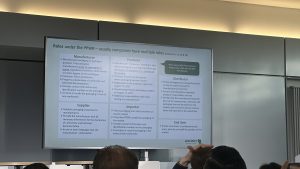
Particular attention was given to the declaration of conformity, which PACOON identified as one of the most immediate and commercially significant obligations emerging from the regulation.
“The declaration of conformity is recognised by market authorities,” Dias da Costa explained, noting that documentation requirements are expected to become increasingly stringent as enforcement mechanisms mature across EU member states.
Slides presented during the session mapped the staged implementation timetable now confronting the industry. Following the regulation’s entry into force in February 2025, the first major compliance phase arrives in August 2026, incorporating obligations linked to substances of concern, labelling requirements and declarations of conformity. Subsequent phases will introduce tighter criteria relating to recyclability performance, recycled content quotas, reuse systems and recycling-at-scale verification through the 2030 horizon.
The presentation spoke of the shift now taking place within packaging development, where regulatory data management is beginning to sit alongside material selection and pack functionality as a core design consideration.
Dias da Costa repeatedly returned to the issue of complexity, particularly for companies operating across multiple packaging formats and European jurisdictions. “We need digital solutions to manage all these requirements,” she said.
Read the full report of this keynote in the upcoming May edition of Kennedy’s Confection. Subscribe here.